Loading the page
Ishango is a non-profit association, a think tank whose principal aim is to foster the emergence of a knowledge society in the Democratic Republic of the Congo. The association was made public in October 2018.
Éduquer ou périr
Our reason for being, as we stated it when founding the association and as it still binds us.
Ishango was made public in October 2018. The association introduced itself in the following terms:
Ishango is an association set up on the initiative of a number of Congolese intellectuals. It is a think tank whose principal aim is to foster the emergence of a knowledge society in the DRC as an answer to the question of underdevelopment, in a world undergoing profound change.
This initiative also seeks to contribute to building a society of excellence in every field of national life, and to establish a community of ideas and minds within the Congolese elite and its youth in particular, around a consensual project for our collective future. This, beyond any political divide.
The last sentence is not a stylistic precaution. A community of ideas formed around a political line would be a party; what the association proposes to build is a place where the quality of an argument does not depend on who is making it.
The method the association has given itself, and the working constraints it imposes.
The association set out its method in the same interview.
The DRC legitimately aspires to become an emerging country within a reasonable horizon. We are aware that economic and social progress is not the fruit of spontaneous generation, but rather the result of action carefully thought through and calculated in advance. In this, thought must precede action, just as the plan must precede the building site.
We are convinced that sharp analysis, informed discussion, constant reflection and rigorous intellectual method produce lasting effects on the public and its institutions, while forming an intellectual foundation without which there is no progress.
Taken seriously, the phrase "the plan must precede the building site" imposes constraints on our work, the first of which is a matter of timing: it rules out commenting on the news, since to comment is to arrive afterwards. Work that claims to precede a decision must be published before that decision is taken, on subjects that are not yet known to be newsworthy.
The second constraint is methodological. An analysis is worth only what can be verified of it: its sources, its scope, its assumptions. Ishango's publications therefore carry their apparatus, even where it weighs the text down, and flag a hypothesis as a hypothesis.
The third is the most demanding: accepting that the work sometimes serves no purpose other than ruling out a bad option. A brief that prevents a pointless expenditure leaves no visible trace. It is nonetheless the most useful thing anticipatory work produces.
2018
Association made public in October 2018
07
Questions held open over several years
54
Analyses, policy briefs, reports and op-eds
04
Ishango Press
October 2018
Ishango sets out its purpose in an interview with the business outlet Zoom Eco, on 28 October 2018.
10 November 2018
15 June 2019
21 August 2019
The association is named after an archaeological site and an object — both are in the Democratic Republic of the Congo, and the object itself is in Brussels.
In 1950, the Belgian geologist Jean de Heinzelin de Braucourt uncovered, at the site of Ishango, on the shore of Lake Edward near the Semliki, on what is now the border between the Democratic Republic of the Congo and Uganda, a fragment of long bone bearing engraved notches.
The object is dated to roughly twenty thousand years ago. It bears one hundred and sixty-eight notches, arranged in three distinct columns, and ends in an embedded shard of quartz.
One column has drawn more attention than the others: its groups set out 11, 13, 17 and 19 — every prime number between 10 and 20, and those alone.
Olivier Keller warns against the central risk in this file: projecting our modern perception of number onto a Palaeolithic artefact. To read prime numbers in a series of notches already assumes that the engraver had the notion of a prime number — which is precisely what would need to be established.
We set out this controversy rather than pass over it. An object whose reading is forced ceases to be a source and becomes an illustration, and an institution that founds its name on an illustration forfeits the right to demand rigour of others.
The bones are held at the Royal Belgian Institute of Natural Sciences, in Brussels. In November 2021, the Congolese Institute for Nature Conservation began proceedings for their return.
The question goes beyond the fate of an object. Scientific heritage kept outside its country of origin remains available for study, but it ceases to be transmissible — not to students, not to the public, not to researchers who cannot afford to travel.
The board, the research staff and the scientific council of the association.
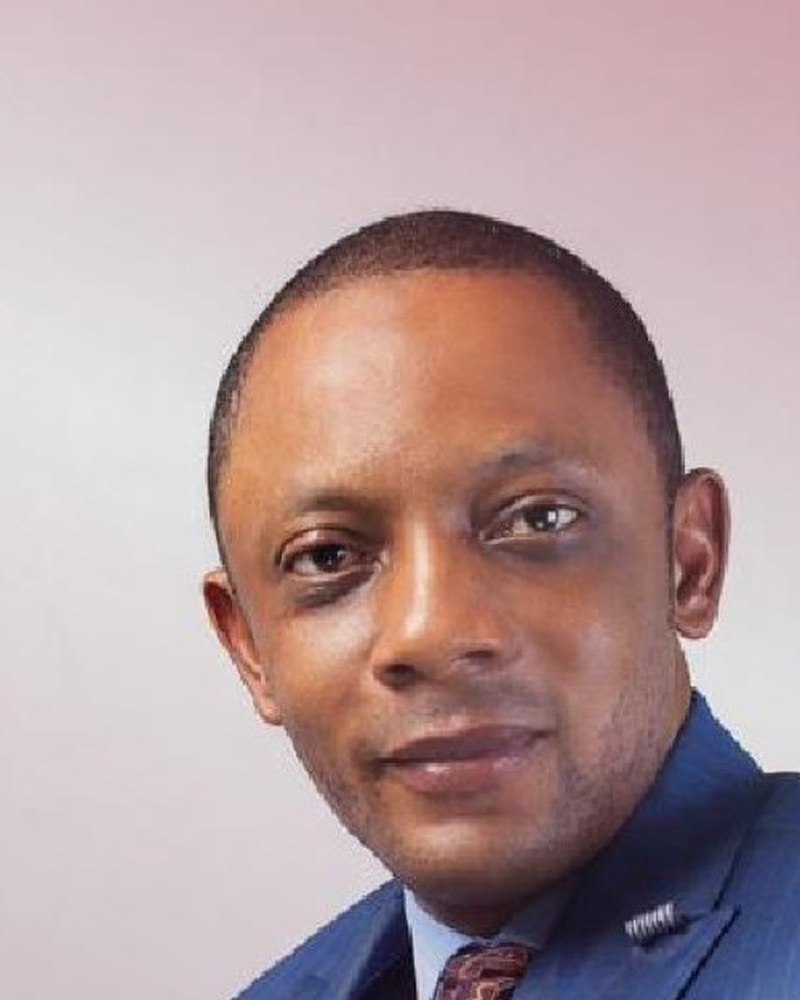
Économiste. Doctorant en sciences économiques à l'Université protestante au Congo, il y est chargé de planification au Laboratoire d'analyse-recherche en économie quantitative (LAREQ) et signe des analyses de conjoncture dans la presse économique congolaise. Il compte parmi les fondateurs d'Ishango. Il ouvre notre cycle de conférences le 10 novembre 2018 par une intervention sur l'économie de la connaissance, et revient le 15 juin 2019 sur la guerre des intelligences. Il conduit les ateliers consacrés au Prince de Machiavel, puis à la genèse du pacte social, et cosigne les actes qui en sont…
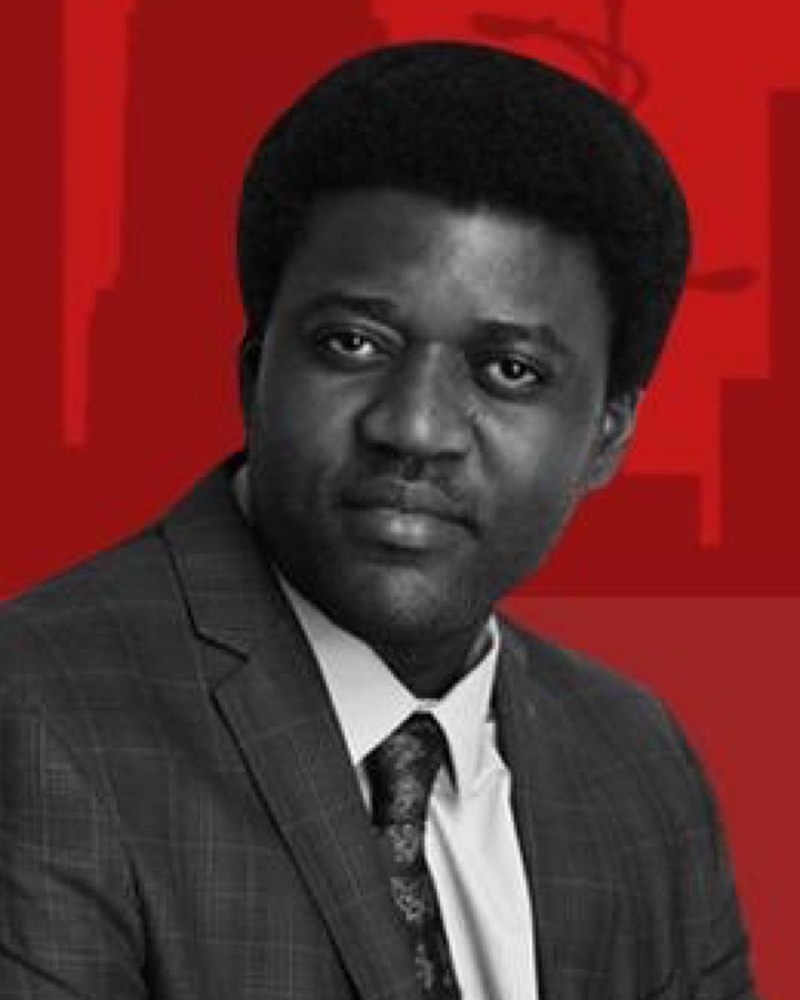
Juriste, politologue et économiste. Diplômé en droit de l'Université de Kinshasa, en sciences économiques de l'Université protestante au Congo et en sciences politiques de l'Université pédagogique nationale, où il a enseigné comme assistant, il exerce comme avocat et a été rapporteur de l'Assemblée provinciale de Kinshasa. Il publie en 2021, chez L'Harmattan, Droit et économie des finances publiques en République démocratique du Congo, préfacé par Jean-François Boudet. Nommé en février 2023 directeur général adjoint chargé des questions techniques et des réformes à la Direction générale du…
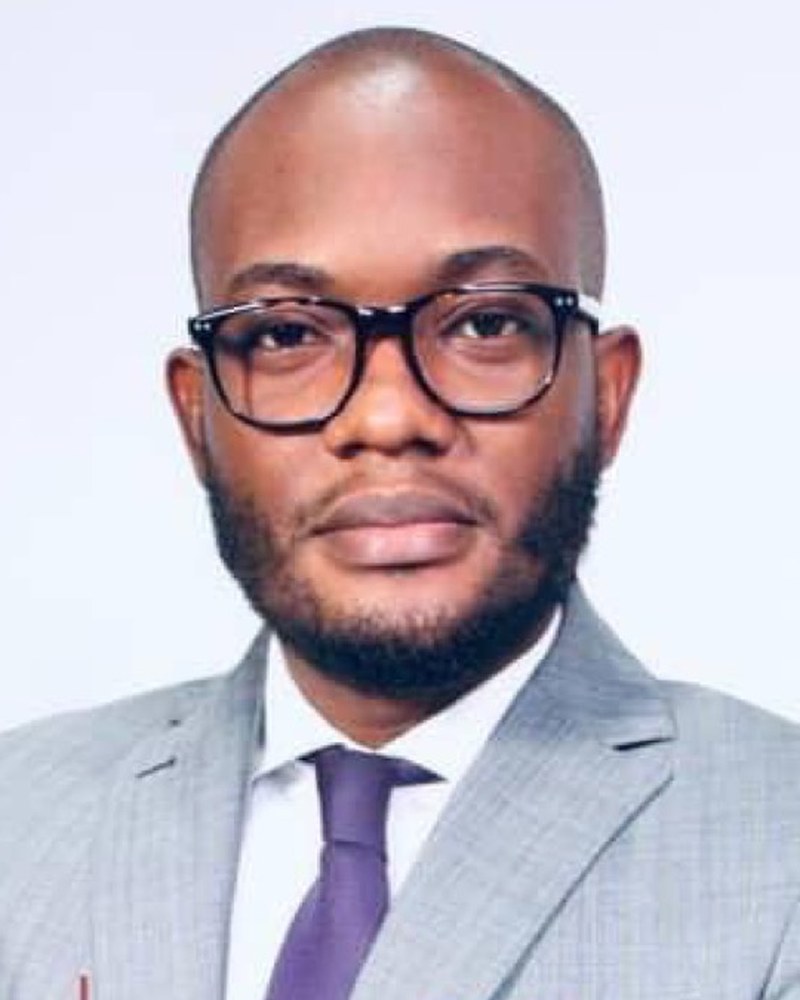
Économiste. Docteur en sciences économiques de l'Université du Québec à Montréal, il enseigne les mathématiques, l'économétrie et la modélisation d'équilibre général à l'Université protestante au Congo, dont il dirige le département des sciences économiques depuis 2025 ; il dirige également le Centre interuniversitaire de recherche en économie mathématique (CIREM). Il fonde en 2012 le Laboratoire d'analyse-recherche en économie quantitative (LAREQ), qui rassemble des chercheurs de trois universités de Kinshasa autour de la modélisation macroéconomique. Ses travaux portent sur la…
30 August 2019
6 September 2019
9 September 2019
6 March 2020
9 November 2020
24 December 2020
26 December 2020
Asked about the choice of this name, the association answered as follows, and the caution of the wording is deliberate:
In the 1950s, the expedition of the Belgian geologist Jean de Heinzelin unearthed on the shore of Lake Edward two pieces of scored bone known as the "Ishango bones". Dated to nearly 20,000 years ago, they may be the remains of the first stirrings of mathematics in the history of humanity. Should that hypothesis be confirmed, it would be a great pride for us to identify with that intellectual inheritance.
"Should that hypothesis be confirmed": the filiation is conditional. That is what makes it tenable, and it is also why the three columns of notches run through all the signage of this house — not as proof, but as a question that has not been closed.
Économiste. Au service de l'État congolais depuis 2019, il contribue à l'élaboration du document de politique et des stratégies industrielles de la République démocratique du Congo et coordonne les travaux qui conduisent à la création du Conseil congolais de la batterie. Il en est nommé directeur général adjoint par ordonnance présidentielle en février 2023. Il conduit également la délégation congolaise dans les négociations avec la Zambie sur la chaîne de valeur des batteries et des véhicules électriques.
Il prend part à la conférence Ishango du 26 décembre 2020, consacrée à la présentation du Prince de Machiavel. Il meurt quelques semaines plus tard. Le 20 janvier 2021, nous avons rendu hommage à sa mémoire en diffusant un extrait de son intervention.